







Choosing the right Dubai neighborhood can be difficult when you need to balance suburban peace with easy city access. This guide explains what living in jumeirah village triangle dubai is like by detailing the community layout, amenities, and property types. You will be able to decide if this low-density district fits your lifestyle and budget before making a move.
Key Takeaways
- Suburban lifestyle focus. Residents prioritize living in jumeirah village triangle dubai for its 860-hectare low-density layout that features over 13,000 residential units.
- Strategic road access. The community sits at the intersection of Sheikh Mohammed Bin Zayed Road and Al Khail Road, allowing for a 15-minute commute to Dubai Marina and Dubai Media City.
- District organization. The master plan is divided into nine specific districts primarily composed of low-rise villas and townhouses to ensure privacy.
- Educational proximity. Families have direct access to the British curriculum at Sunmarke School and Arcadia School located within the neighborhood boundaries.
- Investment performance. Apartment developments within this freehold zone provide investors with annual rental returns ranging from 7% to 8%.
- Recreational facilities. The infrastructure includes more than 350 parks along with dedicated tennis and basketball courts for resident use.
Understanding the JVT Lifestyle and Layout
What is Jumeirah Village Triangle?
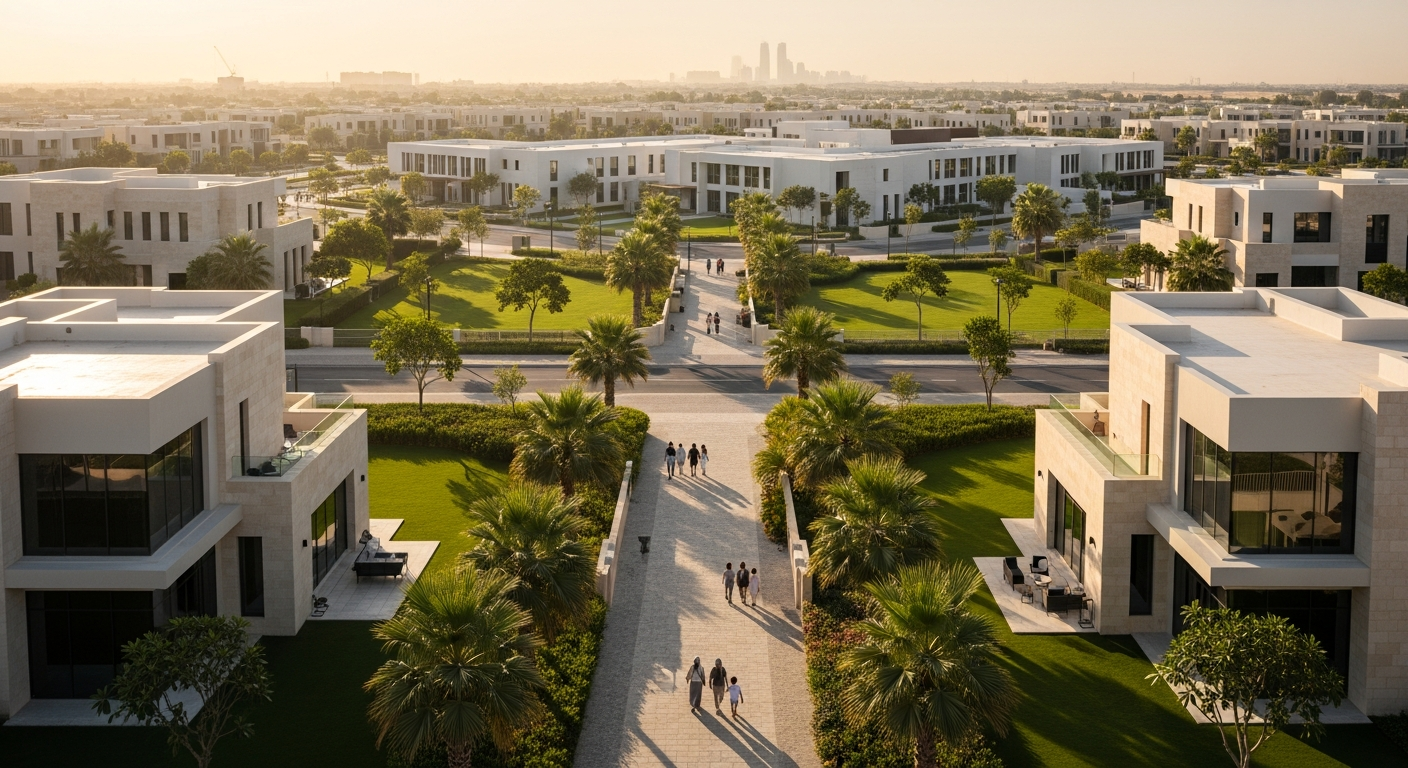
Jumeirah Village Triangle (JVT) is an 860-hectare freehold master community in Dubai developed by Nakheel. It is a quiet, low-density suburban neighborhood organized into nine districts featuring over 13,000 residential units. Located between Sheikh Mohammed Bin Zayed Road and Al Khail Road, it offers a spacious, green environment favored by families and expatriate professionals.
StatGlobal specialists recognize this area as a purpose-built residential retreat. The developer designed the community to provide a sustainable environment that contrasts with the glass-and-steel density of central business districts.
Which district is best to live in JVC Dubai compared to JVT?
Deciding on the best district depends on your density preference; JVT’s districts 1 through 9 focus on low-rise villas and townhouses for a suburban feel. In contrast, Jumeirah Village Circle (JVC) uses districts 10 through 19 and features a much higher concentration of high-rise apartment buildings and urban activity.
While JVC provides more immediate rental options for individuals, JVT remains the preferred choice for those requiring larger plots and quieter streets. The community layout follows a documented numbering system that enhances privacy and reduces through-traffic in residential blocks.
Residents choose living in jumeirah village triangle dubai for its structured layout and focus on outdoor activity.
- Triangle Geography: The community sits within a strategic wedge at the intersection of the E311 and E44, offering residents multiple exit routes to major employment hubs.
- District Organization: The numbering system from 1 to 9 creates a predictable grid, allowing for efficient property management and logical infrastructure placement across the 860 hectares.
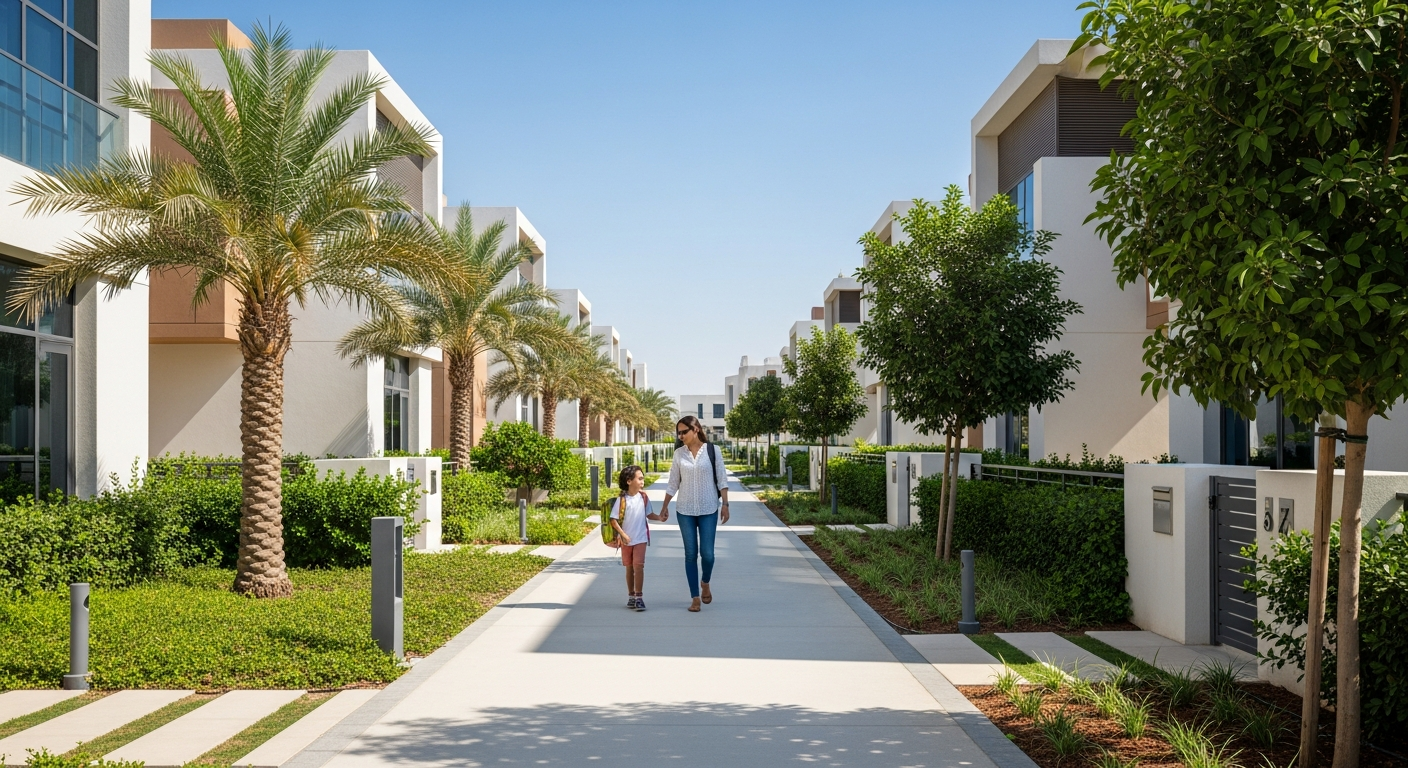
- Low-Rise Character: Most blocks feature independent villas and townhouses with private gardens, avoiding the high-density crowding found in more urbanized Dubai neighborhoods.
- Active Infrastructure: The master plan incorporates shared tennis courts and basketball courts alongside dedicated pet-friendly zones to promote an outdoor lifestyle.
Practical Realities and Resident Considerations
What are the pros and cons of living in JVT?
Living in Jumeirah Village Triangle offers a quiet, low-density environment with over 350 parks and large freehold villa plots. However, the community currently lacks extensive public transport, making car ownership a requirement for most residents. You should also expect occasional dust and noise from ongoing construction projects in newer pockets of the district.
Families benefit from the spacious suburban layout and proximity to schools like Sunmarke, which reduces daily travel time for parents. The trade-off is the distance to the Dubai Metro, as the nearest stations require a short drive or taxi. This makes the area better suited for those who prioritize a peaceful home life over high-frequency urban transit access.
Some residents find that service standards fluctuate depending on the specific developer or sub-contractor managing the building. We recommend reviewing the maintenance reserve and maintenance history before committing to a long-term lease or purchase. StatGlobal observes that districts with established greenery often maintain higher occupancy rates and more stable rental income.
Is Jumeirah Village Triangle a good area for long-term investment?
Jumeirah Village Triangle is a strong candidate for long-term investment due to its high rental returns of 7% to 8% for apartments and significant value growth potential for villas. The community's transition toward self-sufficiency, fueled by the upcoming Al Khail Avenue mall, supports a positive value trajectory for property owners through 2026.
The '3000 rule' indicates that housing costs should ideally not exceed thirty percent of a household's total income, making JVT an accessible choice for mid-range salaries. Service charges vary significantly across the nine districts, so we suggest investors assess these specific expenses against the historical maintenance quality of the building. This data-backed approach ensures that high gross returns are not eroded by unexpected running costs or emergency repairs.
Demand for larger villa plots remains steady as buyers look for defensible properties that offer more square footage than downtown alternatives. These properties typically see slower turnover but offer better protection against market volatility compared to high-density apartment blocks. Investors focused on 2026 growth should prioritize units near completed parks or the primary entry points from Al Khail Road.